


Release time:2026-05-27 14:53:30 view count:55
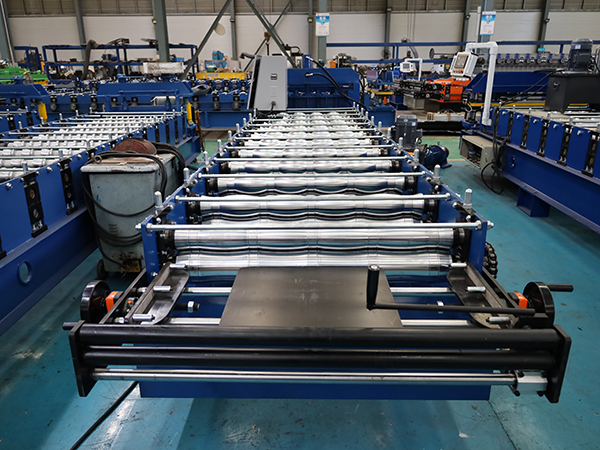
Irregular shapes, uneven surfaces, and out-of-tolerance dimensions of finished profiles are frequent operational faults. Major causes include inconsistent gaps between forming rollers, loose positioning fixtures, and fluctuating feeding speed. Progressive wear on roller surfaces after prolonged service will also undermine the overall forming effect.
When such problems arise, power off the machine first for full inspection. Adjust the gaps of each group of forming rollers to ensure uniformity, and tighten all positioning components and fixtures to prevent displacement during operation. Optimize the feeding system to maintain a steady feeding speed. Conduct routine inspection on roller surfaces, and perform grinding and maintenance once wear is detected. In addition, flatten raw metal materials before feeding to avoid pre-bending affecting the final forming accuracy.
Unusual sounds like clattering, friction, or roaring often emerge during machine running. The primary triggers include insufficient lubrication on transmission components, loose connecting bolts, foreign materials trapped between rollers, as well as aging or damaged bearings. Persistent abnormal noise usually implies potential mechanical failures.
Carry out a thorough inspection of the entire transmission system on a regular basis. Add qualified lubricant to gears, bearings, and rotating parts in accordance with operational specifications. Examine all connecting bolts and fasten any loose ones completely. Shut down the equipment to clear debris stuck in roller gaps and internal structures. Replace aging or damaged bearings promptly to eliminate friction noise. Avoid running the machine with abnormal noise for an extended period to prevent secondary mechanical damage.
Raw materials may get jammed at the feeding section or move intermittently during conveying. This problem mainly results from severely bent materials, misaligned feeding guide rails, damaged conveying components, and irregular material placement. Feeding blockage not only halts production but also causes scratches on both raw materials and rollers.
Straighten metal raw materials before feeding. Calibrate feeding guide rails to keep them aligned with the running direction of forming rollers. Inspect and repair worn conveying parts in a timely manner. Standardize material placement to ensure materials enter the machine horizontally. Once blockage occurs, cut off the power supply before removing stuck materials, and never handle faults while the equipment is in operation.
The machine may fail to start normally, or the forming rollers stop rotating suddenly during production. Common causes involve poor circuit contact, motor overload, misaligned gear meshing, as well as loose or broken transmission chains.
First inspect circuits and electrical connections to resolve poor contact and circuit faults. Prevent long-term overload operation and keep the actual processing load within the rated range of the equipment. Check the meshing status of gears and adjust positions if misalignment appears. Tighten loose transmission chains and replace broken components immediately. After maintenance, run the machine with no load for a trial test to confirm the transmission system functions properly before formal production.
Scratches on the surface of finished profiles will degrade product appearance quality. This issue is mainly caused by burrs or rust on roller surfaces, and hard impurities attached to the contact areas between rollers and raw materials.
Polish burrs on roller surfaces regularly and apply anti-rust treatment. Keep the working area clean to stop dust, metal scraps, and other hard impurities from adhering to rollers and materials. Frequently check contact parts of the equipment and raw materials, and remove attached sundries without delay.
Intense vibration during operation accelerates component wear and reduces forming precision. The main influencing factors include unstable installation foundation, unbalanced rotating parts, and loose fasteners on the machine base.
Reinforce the installation foundation to ensure the machine is placed steadily. Inspect rotating parts and make dynamic adjustments to correct unbalance. Fasten all bolts on the base and frame to reduce vibration amplitude. Regular vibration inspection and adjustment can effectively slow down the aging of mechanical components.
Common Problems and Solutions for Single Layer Roll Forming Machines[J]. Mechanical Engineering Application, 2026: 1–6.
“Common Problems and Solutions for Single Layer Roll Forming Machines.” Mechanical Engineering Application, 2026, pp. 1–6.
(2026). Common problems and solutions for single layer roll forming machines. Mechanical Engineering Application, 1–6.

Copyright © 2026-2027 Mingmu Roll Forming Machinery Manufacture All Rights Reserved