


Release time:2026-10-28 10:20:17 view count:116
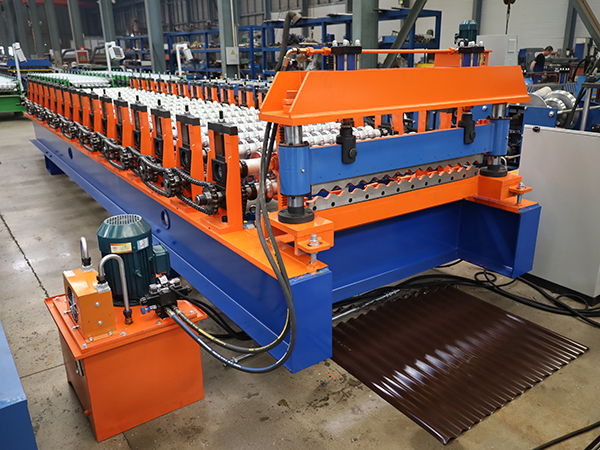
The decoiler is the least glamorous machine in the plant and the one that most often decides whether a line runs well. Every strip of material in the building passes through it, and anything it does wrong, from slip to drag to a dropped coil, becomes the next machine's problem. Buyers who spend an hour comparing forming machines and ten minutes on the uncoiler have the order of attention backwards. This is a straightforward guide to choosing one that suits the coils you actually buy.
A roll forming line or cut-to-length line pulls material at a fairly constant rate, but it does not pull steadily. Start-up, shear cycles and speed changes all load and unload the strip, and the decoiler has to respond to all of it while holding several tonnes of coiled steel in the air. If it overruns, slack enters the line and the profile drifts. If it drags, the strip stretches and cut lengths grow. Most length and profile complaints that look like forming problems begin at the uncoiler, which is why serious suppliers start their troubleshooting conversation there.
A manual decoiler, turned by hand or by the pull of the strip itself, is honest equipment for thin, light coils and short runs. It costs little, needs no power, and suits a shop feeding a single machine intermittently. A motorised decoiler drives the coil and pairs with the line control, which is the normal choice for production work; it keeps pace with the machine and, with the right brake, holds tension properly. A hydraulic decoiler adds powered mandrel expansion and often a hydraulic coil car, which is what heavy coils demand. The decision rule is simple: match the type to coil weight, then to daily running hours, not to price.
The mandrel has to grip the coil without crushing it and release it without scoring the inner wraps. Most machines expand from roughly 450 to 520 millimetres to suit common coil IDs, but suppliers' coils are not identical, so the actual ID range of the coils you buy should be stated at enquiry. Expansion is manual by segment handle on small machines, motorised on mid-range, and hydraulic on heavy duty. Under-rating here shows up as a coil that will not come off the mandrel at the end of a shift, which is nobody's favourite moment.
Loading is where injuries and damaged coils both happen. A coil car, whether manual, electric or hydraulic, lifts the coil from a pallet or C-hook and slides it onto the mandrel, so nobody wrestles tonnes of steel overhead. If your coils exceed what a forklift can place safely, budget for the car; it is a small share of line cost and removes a permanent risk. Also check how the car aligns the coil against the mandrel shoulder, because a coil loaded off-centre will feed off-centre all day no matter how well the rest of the line is set.
When the forming machine stops or slows, a spinning coil wants to keep going. The brake, manual band, pneumatic or motorised regenerative, is what stops it dumping slack into the line. The right amount of braking depends on coil weight, and a machine that serves coils from one tonne to five needs adjustment rather than one fixed setting. On motorised units the drive can hold back-tension and a dancer or loop control can coordinate with the line automatically. Ask how the brake behaves at your heaviest coil, because that is the case that matters.
A loaded decoiler stores real energy, and the guards and controls deserve the same respect as the shear. Keep people out of the swing zone during loading, interlock the machine so it will not turn with a lifting device engaged, and fit an emergency stop within reach of the loading position. Loose banding, damaged inner wraps and telescoped coils are the usual causes of accidents and feed problems alike; a shop habit of refusing damaged coils at goods-in does more for safety than any single device. The manufacturer's manual spells out the guarding it expects, and it is worth actually reading.
State your coil weight, outer diameter, inner diameter and width range, and ask what the machine is rated for at the top of that range rather than in the middle. Ask how expansion is powered, how braking adjusts between light and heavy coils, and what the drive coordinates with on your existing line. Ask to see a decoiler running a coil of your size at the factory, or better, on a line already in service. A manufacturer who asks you these questions first is the one who has supplied lines like yours before, and that is the supplier worth having.
ISO. ISO 12100, Safety of machinery - General principles for design - Risk assessment and risk reduction.
International Electrotechnical Commission. IEC 60204-1, Safety of machinery - Electrical equipment of machines.
ISO. ISO 13849-1, Safety of machinery - Safety-related parts of control systems.
US Occupational Safety and Health Administration. 29 CFR 1910.212, General requirements for all machines.
ISO. ISO 9001:2015, Quality management systems - Requirements.

Copyright © 2026-2027 Mingmu Roll Forming Machinery Manufacture All Rights Reserved