

Release time:2026-05-27 15:19:41 view count:104
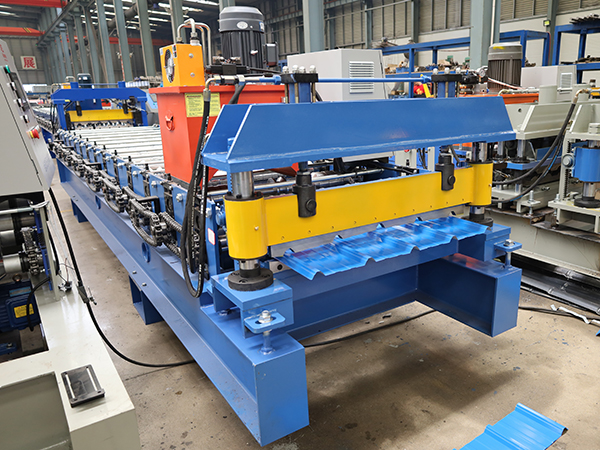
Profile flange or web width exceeds tolerance or varies between sections. This leads to assembly mismatch and poor interchangeability.
Web height or section depth fluctuates along the profile length, causing uneven structural performance and installation issues.
Small features such as lips, hems, or edge returns deviate from design dimensions, often affecting fitment and locking functions.
Left-right imbalance in profile geometry caused by uneven forming forces or misaligned rolls.
Progressive deviation across forming stations, where small errors accumulate into significant final dimensional inaccuracy.
Roll stands not parallel or level
Uneven roll gap left vs. right
Incorrect pass sequence design
Wear or damage on forming rollers
These issues directly distort forming geometry and lead to systematic deviation.
Thickness fluctuation across coil width
Inconsistent yield strength and springback behavior
Poor flatness (coil camber or edge wave)
Material instability forces the forming system to deviate from designed deformation paths.
Fluctuating line speed
Inconsistent strip tension
Excessive forming pressure
Poor lubrication increasing friction resistance
Unstable parameters lead to uncontrolled deformation behavior.
Frame deflection under load
Bearing wear causing roller wobble
Unstable uncoiler feeding tension
Guide system misalignment
These mechanical defects change the reference geometry of forming.
Incorrect roll setup after maintenance
Inadequate calibration before production
Improper adjustment of entry guides
Lack of first-piece inspection
Human factors often amplify small system deviations.
Re-align all roll stands using laser or precision level tools
Adjust roll gap symmetrically (left/right balance)
Replace worn or damaged rolls
Verify pass sequence against design forming schedule
Inspect coil thickness and mechanical properties before use
Reject materials with excessive camber or edge wave
Pre-level strip before forming when necessary
Maintain batch consistency for large production runs
Stabilize line speed to avoid tension fluctuations
Maintain consistent forming pressure across stations
Optimize lubrication to reduce friction variation
Adjust springback compensation based on trial runs
Check frame deformation and tighten base bolts
Replace worn bearings and rollers
Calibrate uncoiler braking system
Align entry and side guide systems
Use go/no-go gauges for first-piece inspection
Implement real-time dimensional measurement systems
Adjust forming parameters based on feedback loop
Record deviations for predictive maintenance
Ensure every production setup follows a fixed calibration checklist including roll alignment, gap verification, and guide positioning.
Schedule periodic inspection for roll wear, surface damage, and clearance drift to prevent gradual deviation buildup.
Maintain consistent speed, tension, and lubrication conditions throughout production cycles.
Improve awareness of forming sensitivity to small adjustments, especially in multi-pass systems.
Dimensional errors in roll-formed metal profiles are mainly caused by tooling misalignment, material inconsistency, unstable process parameters, and equipment mechanical deviations. Effective troubleshooting requires systematic correction of alignment, stabilization of process conditions, and strict material control. Combined with preventive maintenance and real-time monitoring, dimensional accuracy and production consistency can be significantly improved.

Copyright © 2026-2027 Mingmu Roll Forming Machinery Manufacture All Rights Reserved