


Release time:2026-05-27 15:14:56 view count:117
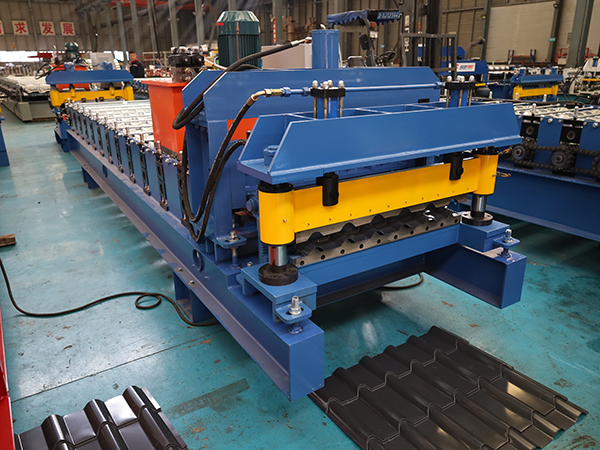
Tiny hard impurities, metal chips, and dust mixed in the production environment will attach to equipment surfaces or raw materials. When profiles move through conveying and forming structures, these hard particles will scrape the surface and form linear or irregular scratches.
Direct hard contact between profiles and tooling, guide rails, rollers, and conveying parts is a major cause of scratches. Excessive contact pressure, unsmooth surfaces of contact parts, and unreasonable contact angles will aggravate surface wear during material movement.
Improper grabbing, stacking, and transferring actions in post-processing will lead to mutual friction and collision between profiles. Random dragging of finished products on hard ground also easily leaves obvious scratches on the surface.
Rough surfaces, burrs, and local protrusions on forming dies, fixtures, and conveying components will continuously scratch the passing profiles. Unstable operation and position deviation of equipment will also cause accidental friction damage.
Unreasonable stacking mode and excessive stacking quantity make profiles squeeze and rub against each other. During turnover and transportation, relative sliding between products will produce dense surface scratches.
Keep the production area clean regularly to reduce floating dust and sundries. Set up filtering and cleaning devices at key positions to remove impurities on raw materials and equipment surfaces, and avoid hard particles participating in production.
Polish and trim burrs and protrusions on tooling, rollers, and guide rails. Lay protective buffer materials on frequent contact positions to isolate direct rigid contact. Adjust the installation angle and gap of components to reduce contact pressure between profiles and equipment.
Formulate unified operation specifications for material taking, transferring, and stacking. Prohibit dragging and random collision of profiles. Use auxiliary tools for handling to avoid direct friction between product surfaces.
Check the surface state of dies, fixtures, and conveying parts every day. Repair and polish rough surfaces in time, and replace severely worn components. Calibrate equipment operation status to prevent position offset from causing accidental scratches.
Adopt scientific stacking modes to control stacking height and spacing. Use isolating materials between layers of profiles to avoid mutual extrusion and sliding. Take protective measures during product turnover to isolate external friction.
Arrange real-time inspection on production lines to find scratch problems at the initial stage and trace the causes in time. Strengthen technical training for operators to raise awareness of surface protection. Establish a regular inspection mechanism for all production links to keep protective measures in effective operation.
Surface scratches on finished profiles are generated by the combined effect of environment, equipment, operation, and product placement. Controlling foreign impurities, improving equipment contact conditions, standardizing operation behaviors, and optimizing product protection can fundamentally curb scratch defects. Persistent daily management and spot inspection will steadily maintain the surface quality of finished profiles.
[1] Anonymous. Reasons for Surface Scratches on Finished Profiles & Countermeasures[J]. Material Processing & Quality Control, 2026: 1–3.
Anonymous. “Reasons for Surface Scratches on Finished Profiles & Countermeasures.” Material Processing & Quality Control, 2026, pp. 1–3.
Anonymous. (2026). Reasons for surface scratches on finished profiles & countermeasures. Material Processing & Quality Control, 1–3.

Copyright © 2026-2027 Mingmu Roll Forming Machinery Manufacture All Rights Reserved