


Release time:2026-05-27 15:51:39 view count:57
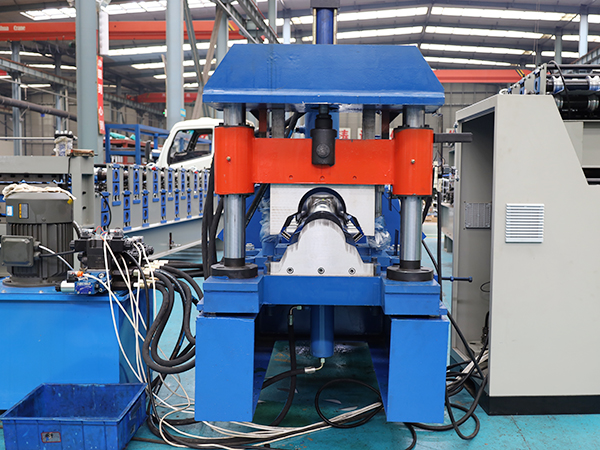
Deformed edges, warped surfaces, and uneven radii are common defects in finished ridge caps. These issues are mainly caused by inconsistent roller gaps, misaligned roller positions, unstable running speed, and uneven material hardness or sheet irregularities.
Solutions:
Adjust and unify roller gaps across all forming stations
Correct roller alignment before production
Maintain stable machine speed and avoid frequent speed changes
Pre-straighten raw materials
Stop machine and recalibrate rollers if deformation appears, then test with scrap material
Length, width, and radius do not meet specifications. Causes include positioning errors, worn measuring components, and incorrect system parameters. Loose machine frames also contribute to cumulative deviation.
Solutions:
Tighten positioning fixtures and frame bolts regularly
Calibrate measuring devices periodically
Replace worn components
Reset control parameters based on production requirements
Conduct in-process sampling and adjust immediately when deviation occurs
Rattling, friction, or abnormal roaring sounds occur due to poor lubrication, loose bolts, foreign objects, or damaged rotating parts.
Solutions:
Perform daily lubrication of bearings and gears
Tighten all fasteners
Stop machine and clean internal debris
Replace worn bearings and rotating parts
Do not operate equipment under abnormal noise conditions
Material jams at the inlet due to deformation, misaligned guide rails, or excessive feeding speed.
Solutions:
Pre-straighten raw sheets
Align feeding guide rails properly
Control feeding speed
Cut power before clearing blockage
Never clear jams during operation
Intermittent movement or track deviation caused by worn rollers, loose belts, or uneven machine foundation.
Solutions:
Replace or repair rollers and belts
Tighten transmission belts
Level machine foundation and adjust support feet
Ensure stable conveying alignment
Failure to start or sudden stoppage due to circuit issues, overload, gear misalignment, or chain loosening.
Solutions:
Check electrical circuits and terminals
Avoid overload operation
Adjust gear meshing
Tighten chains
Perform no-load test before restarting
Scratches caused by burrs, rust, or impurities on roller surfaces.
Solutions:
Polish rollers regularly
Apply anti-rust treatment
Clean rollers and work area frequently
Prevent debris from entering forming system
Caused by unstable foundation, unbalanced rotating parts, or loose bolts.
Solutions:
Reinforce installation base
Perform dynamic balancing of rotating parts
Tighten all structural bolts
Conduct periodic vibration checks
Wear, pitting, and scratches caused by long-term friction and impurities.
Solutions:
Perform daily inspection
Maintain lubrication
Clean raw materials before feeding
Repair or replace rollers when necessary
Materials run off-track due to loose or misaligned guide rails.
Solutions:
Check guide rail bolts daily
Recalibrate alignment regularly
Stop machine immediately when deviation occurs
Bolts and connectors loosen due to vibration.
Solutions:
Perform daily tightening inspection
Focus on frame and roller assemblies
Establish scheduled fastening maintenance system
Insufficient oil, leakage, or deteriorated lubricant increases friction.
Solutions:
Check oil level daily
Replace degraded oil
Repair leaks and seals
Maintain lubrication system integrity
Uneven pressure leads to incomplete or distorted forming.
Solutions:
Inspect pressure adjustment systems
Balance hydraulic/pneumatic systems
Standardize roller pressure settings
Eliminate pressure fluctuations
Blade jamming or failure due to wear, blockage, or control issues.
Solutions:
Sharpen or replace blades
Clean cutting area
Check control signals and circuits
Maintain smooth actuator movement
Length deviation caused by sensor wear, parameter drift, or delayed response.
Solutions:
Calibrate sensors regularly
Lock production parameters
Adjust cutting response timing
Replace faulty measurement devices
Caused by unstable power, aging components, or overheating protection.
Solutions:
Stabilize power supply system
Replace aging electrical parts
Improve cooling and ventilation
Clean electrical cabinet regularly
Ridge cap roll forming machine faults mainly arise from mechanical wear, poor adjustment, unstable operation, electrical issues, and insufficient maintenance. Systematic inspection, standardized parameter control, and regular preventive maintenance can effectively reduce failures, improve production stability, and ensure consistent product quality.

Copyright © 2026-2027 Mingmu Roll Forming Machinery Manufacture All Rights Reserved