


Release time:2026-05-27 15:40:13 view count:175
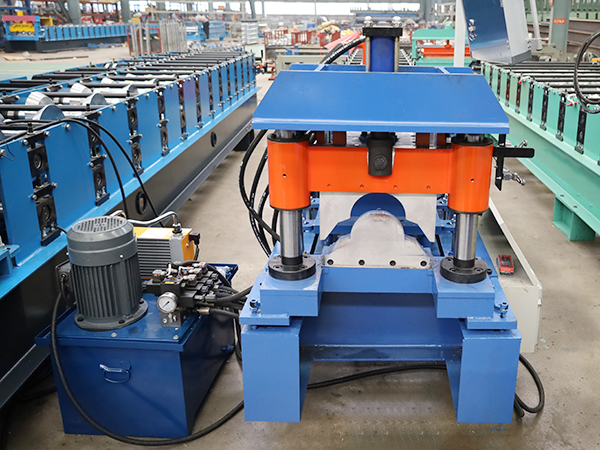
Rough surfaces, burrs, wear and local protrusions on forming rolls, guide plates and conveying components will continuously scrape profile surfaces during operation. Uneven surface finish of contact parts is a direct trigger for linear scratches.
Metal scraps, dust and residual debris in the production area adhere to tooling surfaces or raw materials. These hard substances act as abrasives and leave irregular scratches when materials pass through each forming station.
Material deviation during conveying leads to long-term friction between ridge caps and side guides. Excessively narrow limiting gaps also cause rigid extrusion and scraping on profile edges and surfaces.
Dragging, collision and mutual extrusion during picking, transferring and stacking will produce contact scratches. Lack of isolation between stacked products results in sliding friction and surface damage.
Insufficient or inappropriate lubrication increases dry friction between materials and rolls. Excessive forming pressure and unbalanced tension also cause local surface wear and scratches.
Polish burrs, protrusions and rough areas on rolls and guide parts regularly to maintain smooth contact surfaces. Repair minor defects in time and replace severely worn components. Perform routine inspection to ensure tooling remains in good condition.
Clean scattered metal scraps and dust in the working area every shift. Install cleaning structures at the feeding section to remove attachments from raw materials. Prevent external debris from entering the machine.
Calibrate entry guides and limiting devices to ensure materials move along the central line. Maintain reasonable clearance in side guides to avoid forced friction. Remove burrs from guide surfaces to reduce scratching risk.
Establish unified procedures for material transfer, cutting and collection. Prohibit dragging finished ridge caps on hard surfaces. Use soft isolation materials between stacked products to prevent sliding and friction. Control stacking height and quantity to avoid compression damage.
Select appropriate lubricants to form a protective film and reduce friction. Adjust forming pressure and feeding tension to appropriate levels to avoid local stress concentration and excessive contact force.
Conduct real-time surface inspection on the production line to detect scratches early and trace causes promptly. Strengthen operator training to improve surface protection awareness. Implement regular maintenance schedules for tooling and guiding components, and perform full cleaning during downtime.
Surface scratches on finished ridge cap profiles are mainly caused by defective tooling, environmental impurities, abnormal feeding, improper operation and unsuitable process settings. By maintaining tooling, improving the production environment, standardizing handling procedures, and optimizing lubrication and parameters, scratch defects can be effectively reduced. Continuous inspection and standardized management are essential for maintaining stable product surface quality.
GB/T 7714
[1] Anonymous. How to Avoid Surface Scratches on Finished Ridge Cap Profiles[J]. Building Profile Quality Control & Processing Technology, 2026: 1-3.
MLA
Anonymous. "How to Avoid Surface Scratches on Finished Ridge Cap Profiles." Building Profile Quality Control & Processing Technology, 2026, pp. 1-3.
APA
Anonymous. (2026). How to avoid surface scratches on finished ridge cap profiles. Building Profile Quality Control & Processing Technology, 1–3.

Copyright © 2026-2027 Mingmu Roll Forming Machinery Manufacture All Rights Reserved