


Release time:2026-05-27 15:38:25 view count:159
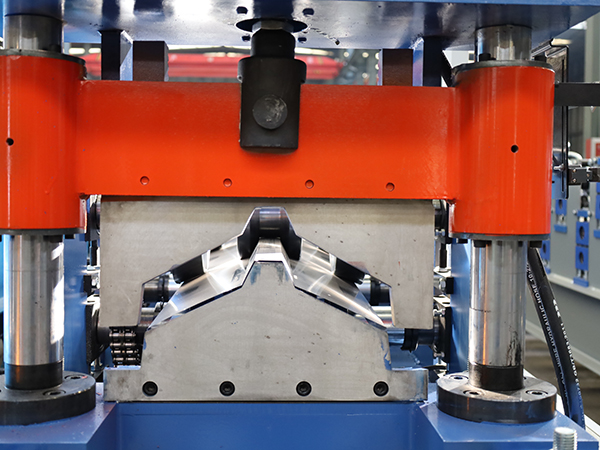
Unstable feeding speed and tension cause irregular stress during forming. As a result, cross-sectional dimensions and bending angles vary continuously within a single product and across batches.
The strip shifts laterally during conveying and rubs against guide components. This leads to surface scratches and causes asymmetric forming in finished profiles.
Intermittent feeding causes materials to pile up at forming stations or transition areas. Severe accumulation may result in complete blockage and production stoppage.
Unstable conveying creates fluctuating load on drive components. This leads to vibration, noise, and accelerated wear of transmission parts.
Worn, loose, or misaligned guide devices cannot properly control strip direction. Improper gap settings further disrupt stable material flow and cause wandering movement.
Excessive or insufficient tension leads to irregular stretching or relaxation of the strip. Malfunctioning tension systems can cause sudden force fluctuations during operation.
Worn bearings, deformed rollers, and loose chains cause uneven rotational speed. This leads to inconsistent pulling force across forming stations.
Uneven thickness, poor flatness, curled edges, or irregular shapes reduce conveying stability. High surface adhesion further increases resistance during movement.
Improper speed settings, frequent adjustments, and poor synchronization between stations disrupt continuous conveying stability across the production line.
Re-align entry guides so material feeds along the centerline. Adjust side limiter gaps to ensure proper constraint without excessive friction. Repair or replace worn guide plates and remove surface burrs.
Adjust tension systems to maintain consistent pulling force. Avoid excessive tension (which stretches material) or insufficient tension (which causes wandering). Inspect tension components regularly to ensure stability.
Ensure all roll groups are parallel and synchronized. Tighten loose transmission components and replace worn bearings or rollers. Maintain proper lubrication to stabilize rotational speed.
Flatten curled edges and trim irregular shapes before feeding. Separate materials with significant thickness differences. Clean surface contaminants to reduce friction during conveying.
Maintain stable line speed suitable for material type. Synchronize speeds across all forming stations. Avoid arbitrary speed changes during production and verify stability through trial runs.
Inspect fastening conditions and wear status of guiding components each shift. Test tension system stability to detect early abnormalities.
Perform regular lubrication and tightening of drive components. Monitor operating sound and roller rotation to detect speed irregularities early.
Check thickness, flatness, and edge condition before production. Reject unqualified materials to prevent downstream conveying issues.
Continuously observe material tracking during operation. Make immediate adjustments when early signs of deviation or instability appear.
Uneven material conveying is caused by a combination of guiding system defects, unstable tension, transmission issues, raw material quality, and improper process parameters. Targeted adjustment methods can effectively restore stable feeding. With consistent maintenance, strict material control, and standardized operation, roll forming systems can maintain stable conveying performance, reduce defects, and ensure continuous production efficiency.
[1] Anonymous. Uneven Material Conveying: Common Issues and Adjustment Skills for Roll Formers[J]. Roll Forming Production Technology, 2026: 1–3.
Anonymous. “Uneven Material Conveying: Common Issues and Adjustment Skills for Roll Formers.” Roll Forming Production Technology, 2026, pp. 1–3.
Anonymous. (2026). Uneven material conveying: common issues and adjustment skills for roll formers. Roll Forming Production Technology, 1–3.

Copyright © 2026-2027 Mingmu Roll Forming Machinery Manufacture All Rights Reserved